Introduction
When considering investment in barrels, it can feel like a big jump from bottle investment, but understanding the basics will build a great foundation for any future investments.
Whisky barrel investment is gaining popularity as a unique and tangible way to diversify an investment portfolio. Unlike traditional investments in stocks or real estate, investing in whisky allows you to own a tangible luxury product that can gain value through maturation.
Single malt whisky has long been prized for its quality, rarity, and collectable value. In recent years, the investment market for casks has grown, with many investors seeing impressive returns from whiskies that have caught the eyes of investors and independent bottlers. In this guide, we’ll break down everything you need to know before getting started.
Barrel vs Cask: What’s the Difference?
A cask is just another name for a barrel and is the more commonly used term in Scotch whisky. Slightly confusingly, the name given to a specific type of cask when it comes to single malt maturation is a barrel.
What is a Whisky Barrel?
In Scotch whisky, barrels typically refer to ex-american bourbon barrels. They are a smaller unit of whisky storage compared to sherry or port casks and typically hold between 180 to 220 litres. Due to their smaller size, they often mature faster, which can impact flavour and quality. Their lower entry cost can often make barrels more accessible for first time investors. This makes them ideal for beginners looking to enter the market without committing a large sum of money.
What is a Whisky Cask?
A cask is the general term used in Scotch whisky for barrels used to mature single malt. They come in all shapes and sizes, ranging from octaves at 40 litres, to sherry puncheons at over 500 litres. Different shapes and sizes, in addition to previous uses (bourbon, sherry, port, wine, even tequila), will affect the final flavour of the whisky. From an investment perspective, it pays to understand the differences. Some flavours will be in greater demand at different times and some distilleries perform better in certain casks. Crucially, smaller sized casks typically mature whisky faster than larger casks, which will change the hold time of an investment. The latter come with higher initial costs and more complex storage requirements, but can lead to bigger returns.

Which is Right for Beginners?
For beginners, starting with a barrel can be a smart choice. It provides hands-on experience with whisky investment, requires lower upfront capital, and still allows you to benefit from potential appreciation as the whisky matures. As investors gain confidence and knowledge, they may consider moving to larger whisky cask investments for higher potential returns.
The Whisky Investment Process
Understanding the whisky investment process will help you make informed decisions about your next steps, so let’s get into it.

Step 1: Selecting a Whisky Barrel or Cask
The first step on your investment journey is to pick whether you want a barrel or another type of cask. You should consider the distillery’s reputation, the whisky age, and the type of wood used for ageing. You’ll find that premium distilleries and limited-edition releases can come with higher potential returns but have higher entry costs.
Step 2: Choosing a Reputable Distillery or Broker
Do your research. It’s important that you work with a trusted distillery or licensed whisky investment company, like Cask Trade. This is crucial as the company will handle storage, insurance, and record-keeping, meaning your investment remains secure and compliant. At Cask Trade we even have a warehouse where you can come and visit your investment in person, and even do a tasting on site.
Step 3: Monitoring Ageing and Valuation
The beauty of whisky is that as it ages, its value increases - this maturation means it’s important to continue tracking market trends, auction prices, and the whisky’s condition over time. Companies like Cask Trade will regauge and collect a sample to help you understand potential returns and whether the investment needs to mature a little longer.
Step 4: Selling or Bottling at the Right Time
So your whisky investment has been maturing, but knowing when to sell or bottle is crucial in benefiting from the profits made. You can sell the barrel/cask on or you can bottle for a potentially higher return - there are both positives and negatives to consider for this. The main fact is that timing in the market is critical, as market demand can significantly influence the final sale price. If you want to understand more about this read our article on Bottle or Sell?
Risks of Whisky Barrel Investment
As with any investments, there are risks that you need to consider; this is especially important as a beginner.
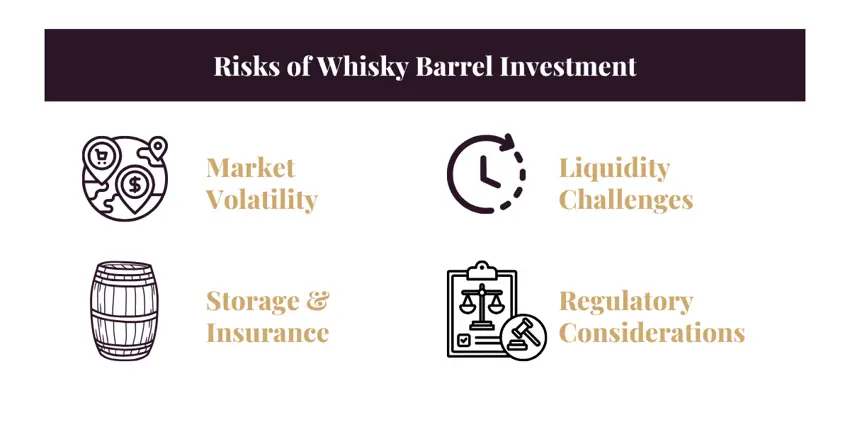
Market Volatility: It’s crucial to understand that due to market fluctuations, not every barrel or cask will increase in value, and returns depend on market demand, rarity and brand reputation.
Storage & Insurance: It’s essential that whisky is stored correctly, meaning there will be additional costs for storage fees, insurance and proper handling in order to maintain quality.
Liquidity Challenges: Unlike stocks, whisky investments are not highly liquid. Selling a barrel or cask may take time depending on the market, especially if you’re targeting premium buyers or auctions.
Regulatory Considerations: Specific rules vary country-by-country when it comes to whisky. Countries have specific rules for owning and selling whisky casks. Working with a licensed broker or distiller ensures compliance and protects your investment.
Practical Tip: Treat investments as a long-term venture. Patience and research is key to maximising returns and managing whisky investment risk.
What Influences Potential Returns?
Not every whisky cask appreciates at the same rate. Your potential ROI depends on five key influences:
Influence 1: Distillery Reputation: Well-known distilleries command higher resale values and attract more buyers.
Influence 2: Age of the Whisky: Older whisky typically sells for more, but it also costs more to store and insure.
Influence 3: Cask Type: Sherry casks, port casks, and other premium wood types can add unique flavours that increase value.
Influence 4: Market Conditions: Global demand for single malt and rare whisky changes with trends, collectors’ interests, and production shifts.
Influence 5: Rarity & Limited Releases: Limited-edition or discontinued expressions often become highly sought after.
Average ROI for Whisky Barrel Investment:
-
Young whisky (8–12 years): modest but steady growth
-
Mid-aged whisky (12–20 years): significant appreciation potential
High-end casks (20+ years): premium resale value, often purchased by collectors or bottlers
Conclusion
A whisky barrel investment offers an accessible entry point into alternative investments, with lower upfront costs than many tangible assets.
When managed correctly, it provides a long-term, potentially high-reward opportunity for beginners. However, success depends on research, choosing reputable distilleries, and understanding both ongoing costs and market risks.
Ready to take the next step in your whisky investment journey? Contact Us.